
Padel Racket Manufacturing
Padel Racket Paint Systems: From Surface Preparation to Final Coating
Aug
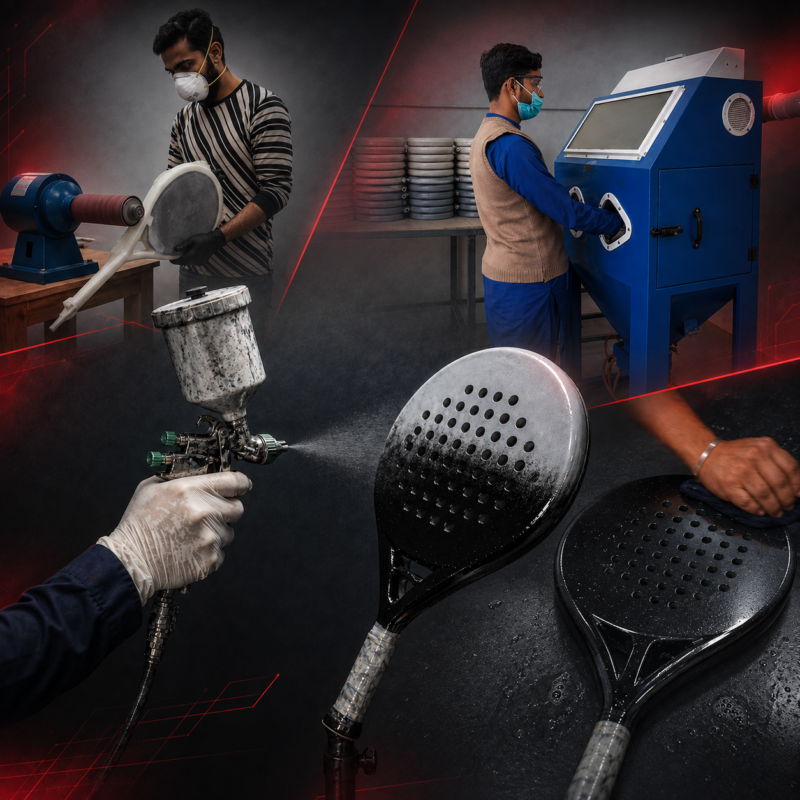
Padel racket paint systems: from surface preparation to final coating is a critical part of racket manufacturing because a premium finish depends on much more than the final color coat. Surface preparation, filling, primer, paint compatibility, curing, graphics and clear coating must work together as one controlled finishing system.
A visually attractive racket can still fail in production if adhesion is poor, sanding is inconsistent, layers are incompatible or curing is incomplete. For OEM and ODM manufacturing, the paint process should therefore be treated as a repeatable technical specification rather than a decorative afterthought.
Why the Padel Racket Paint System Matters
The paint system gives the racket its visual identity, but it also affects surface protection, branding durability, consistency and perceived product quality.
A complete finishing system may include:
- Composite surface inspection
- Sanding and leveling
- Defect filling
- Primer or sealer
- Base color application
- Graphics or decorative layer
- Final clear coat
- Curing and inspection
Surface Preparation Before Painting
After molding and demolding, the racket surface may contain mold-release residue, flash, resin-rich areas, minor waviness, pinholes or handling contamination. These must be addressed before the coating system begins.
The goal of preparation is to create a clean, stable and uniform substrate that provides sufficient mechanical and chemical adhesion for the next layer.
Typical Preparation Steps
- Remove mold flash and edge irregularities
- Inspect for structural defects before cosmetic work
- Clean oil, dust and release-agent residue
- Level resin-rich or uneven areas
- Create a uniform sanding profile
At LeoEdge, this stage is important because cosmetic work begins only after the molded composite surface has been checked and prepared. Surface quality at this point directly affects how clean the later paint and graphic layers can appear.
Sanding the Composite Racket Surface
Sanding improves surface uniformity and creates a controlled mechanical key for subsequent coatings. The objective is not to aggressively remove structural laminate.
Over-sanding can damage the outer carbon or fiberglass reinforcement, expose fibers and create weak cosmetic zones. Under-sanding can leave glossy or contaminated areas where primer or paint may not adhere consistently.
LeoEdge uses sanding as a preparation step, not as a way to reshape the structural laminate after molding. The objective is to create a clean, even surface for the following filling, primer and coating stages while protecting the carbon or fiberglass construction underneath.
Filling Pinholes, Low Spots and Surface Defects
Composite molding can leave minor surface pinholes, shallow depressions or local imperfections that become more visible after painting. A compatible filler or surfacing material can be used to level cosmetic defects before primer.
The filler should bond well to the prepared composite and remain compatible with the primer and paint system applied above it.
Common Cosmetic Defects Addressed Before Painting
- Small pinholes
- Minor resin voids at the surface
- Low spots
- Edge transition marks
- Shallow sanding scratches
Deep cracks, delamination or structural voids should not simply be hidden with filler; they require a structural quality decision.
Primer and Sealer in Padel Racket Finishing
Primer creates an intermediate layer between the composite substrate and decorative coating. Depending on the selected system, it can improve adhesion, surface uniformity, color consistency and sanding characteristics.
A sealer may also be used where the objective is to isolate the substrate or create a more uniform surface for the basecoat.
The primer must be compatible with the substrate and all later layers. Mixing unrelated coating chemistries without testing can create lifting, wrinkling, poor adhesion or solvent sensitivity.
Basecoat and Color Coats
The basecoat establishes the primary visible color of the racket. Uniform application is important because uneven film thickness can produce shade variation, patchiness or different gloss levels after clear coating.
OEM projects may use solid colors, metallic effects, fluorescent colors or other decorative systems, but each additional effect introduces more process variables.
| Coating Stage | Main Purpose | Typical Risk if Poorly Controlled |
|---|---|---|
| Surface prep | Create clean, uniform substrate | Poor adhesion, visible defects |
| Filler | Level small surface imperfections | Shrinkage, cracking, sink marks |
| Primer | Promote adhesion and uniformity | Lifting, poor bonding |
| Basecoat | Provide color and appearance | Patchiness, runs, shade variation |
| Graphics | Add branding and design | Misalignment, poor transfer or adhesion |
| Clear coat | Protect and define final finish | Orange peel, runs, low gloss, delamination |
Graphics, Logos and Branding Layers
Padel rackets can use different graphic techniques depending on design complexity, production volume and required appearance.
Possible methods include screen printing, decals, transfer graphics and other compatible decorative processes. The graphics layer must bond correctly to the underlying coating and remain compatible with the final clear coat.
For production consistency, brands should define logo position, scale, color references, print method and clear-coat compatibility in the approved artwork specification.
For LeoEdge OEM projects, the graphic stage is linked to the approved brand artwork rather than treated as a separate decoration step. Logo placement, print scale, color direction and the relationship between the graphic layer and final clear coat are reviewed as part of the finished racket appearance.
2K Clear Coat for Padel Rackets
A two-component clear coat is commonly used as the final protective and visual layer. The resin and hardener react chemically to form the cured coating.
The clear coat can improve scratch resistance, chemical resistance, gloss consistency and protection of graphics, but performance depends on correct mixing, application thickness, flash time and cure.
Variables That Must Be Controlled
- Clear-coat-to-hardener ratio
- Approved thinner or reducer level where applicable
- Spray viscosity
- Gun setup and atomization
- Coat thickness
- Flash-off time
- Cure temperature and duration
LeoEdge commonly develops racket finishes around a protected final surface, including matte or gloss appearance depending on the brand brief. The target is not only visual depth, but also a clear and repeatable final coating over the color and graphic layers.
Matte vs Gloss Padel Racket Finishes
Gloss and matte are visual finish choices, but they can require different coating formulations or application control.
Gloss Finish
Produces stronger visual depth and reflection, making graphics and carbon-style appearance more pronounced.
Matte Finish
Creates a lower-reflection premium look but requires consistent film application because gloss variation can become visible.
Matte appearance is typically created through coating formulation rather than simply by applying less clear coat.
Paint Curing and Drying
Dry-to-touch and fully cured are not the same condition. A coating can feel dry while chemical crosslinking is still developing.
The required cure cycle depends on the coating chemistry. Manufacturers should control:
- Ambient or oven temperature
- Humidity where relevant
- Flash time between coats
- Final cure duration
- Part temperature rather than only air temperature
Excessive heating can also affect other racket materials, so the finishing cure cycle must remain compatible with the composite structure, EVA core and adhesives.
Paint Adhesion on Composite Padel Rackets
Adhesion depends on substrate cleanliness, sanding profile, coating compatibility and proper cure. Mold-release contamination is a particularly important risk because even a visually clean surface may contain residues that interfere with bonding.
A controlled process should define the cleaning method, allowable time between surface preparation and coating, and handling procedure so prepared rackets are not contaminated again.
Common Padel Racket Paint Defects
Orange Peel
Uneven texture can result from atomization, viscosity, spray distance, temperature or film-flow issues.
Runs and Sags
Often associated with excessive wet film, slow flash or unsuitable spray technique.
Pinholes
May originate from the substrate, trapped air, solvent release or inadequate surface filling.
Fish Eyes
Localized craters can indicate contamination such as oil, silicone or incompatible surface residues.
Peeling or Delamination
Can result from poor preparation, incompatible layers, contamination or insufficient cure.
Color Variation
May come from inconsistent mixing, film thickness, spray technique or batch variation.
Dust Inclusion
Contamination during spraying or curing can create visible particles in the final surface.
Low Gloss or Haze
Can be associated with coating chemistry, humidity, cure condition, spray setup or surface contamination.
Quality Control for Padel Racket Paint Systems
Paint QC should evaluate both appearance and adhesion. The approved production standard should define what is acceptable before bulk output begins.
Visual Inspection
- Color consistency
- Gloss or matte uniformity
- Logo and graphic alignment
- Dust, runs, orange peel and pinholes
- Edge and hole-area finish quality
Process Control
- Paint batch identification
- Mix ratio and viscosity control
- Spray-gun setup
- Application time
- Flash time
- Cure temperature and duration
Adhesion and Durability Checks
Depending on the coating specification, manufacturers may use adhesion checks, hardness evaluation, solvent resistance, visual wear testing or other agreed QC methods.
How LeoEdge Approaches Padel Racket Finishing
At LeoEdge Enterprises, paint and finishing are integrated into the wider racket manufacturing process rather than handled as an isolated cosmetic operation. The finish has to work with the molded composite surface, the selected graphic method and the approved final appearance.
A typical LeoEdge finishing workflow can include:
- Molded surface inspection to identify flash, pinholes, surface irregularities or areas requiring correction.
- Controlled sanding and surface preparation to create a uniform substrate without unnecessarily cutting into the structural laminate.
- Filling and leveling of acceptable cosmetic imperfections before primer or color application.
- Color development according to the brand brief and approved sample.
- Branding and graphics application using the selected decorative process for the design.
- Final clear coating to protect the decorative layers and establish the required matte or gloss appearance.
- Final visual QC for color consistency, graphic alignment, finish uniformity and surface defects.
This approach is especially important for OEM and ODM brands because a premium racket is judged not only by its internal construction, but also by how consistently the final product looks from one production batch to the next.
Paint Systems for OEM and ODM Padel Rackets
For OEM and ODM development, the paint system should be part of the approved product specification. A brand should define not only the final color but also the intended surface finish, graphics process and durability expectation.
At LeoEdge, this means the approved sample should act as the visual reference for bulk production. Color direction, graphic placement, finish level and overall appearance should be agreed before scale-up so production QC has a clear standard to compare against.
A practical approval sequence is:
Once a finish is approved, changing primer, basecoat, hardener, reducer or clear coat should be treated as a controlled process change because layer compatibility can affect final performance.
Frequently Asked Questions
Surface preparation removes contamination and irregularities while creating a uniform substrate for primer and paint adhesion.
Primer can improve adhesion, surface uniformity and color consistency between the composite substrate and decorative coating system.
A two-component clear coat provides a chemically cured protective layer over paint and graphics and can improve durability, gloss and surface resistance.
Possible causes include poor sanding, contamination, mold-release residue, incompatible coating layers or insufficient cure.
Yes, but multiple finish zones require controlled masking, compatible coating systems and additional process steps to maintain clean boundaries and consistent appearance.
Final Thoughts
Padel racket paint systems from surface preparation to final coating should be treated as a complete manufacturing process. High-quality appearance begins with a stable composite substrate, careful sanding and defect correction before primer, color and graphics are applied.
The final clear coat then protects the decorative system and defines the finished appearance, but coating quality depends on compatibility, mixing, spray control and cure. For OEM and ODM brands, a documented paint specification is essential for maintaining consistent color, gloss, adhesion and visual quality across production batches.
For LeoEdge Enterprises, this finishing stage connects manufacturing engineering with brand identity: the objective is to deliver a racket that is structurally sound, visually consistent and aligned with the approved OEM or ODM design.
Develop a Custom Padel Racket Finish With LeoEdge
LeoEdge Enterprises works with brands on composite construction, custom colors, graphics, matte or gloss finishes and OEM/ODM padel racket development.
Start Your Padel Racket Project