
Padel Racket Manufacturing
Padel Racket Surface Finishing: Matte, Gloss and Textured Options
Aug
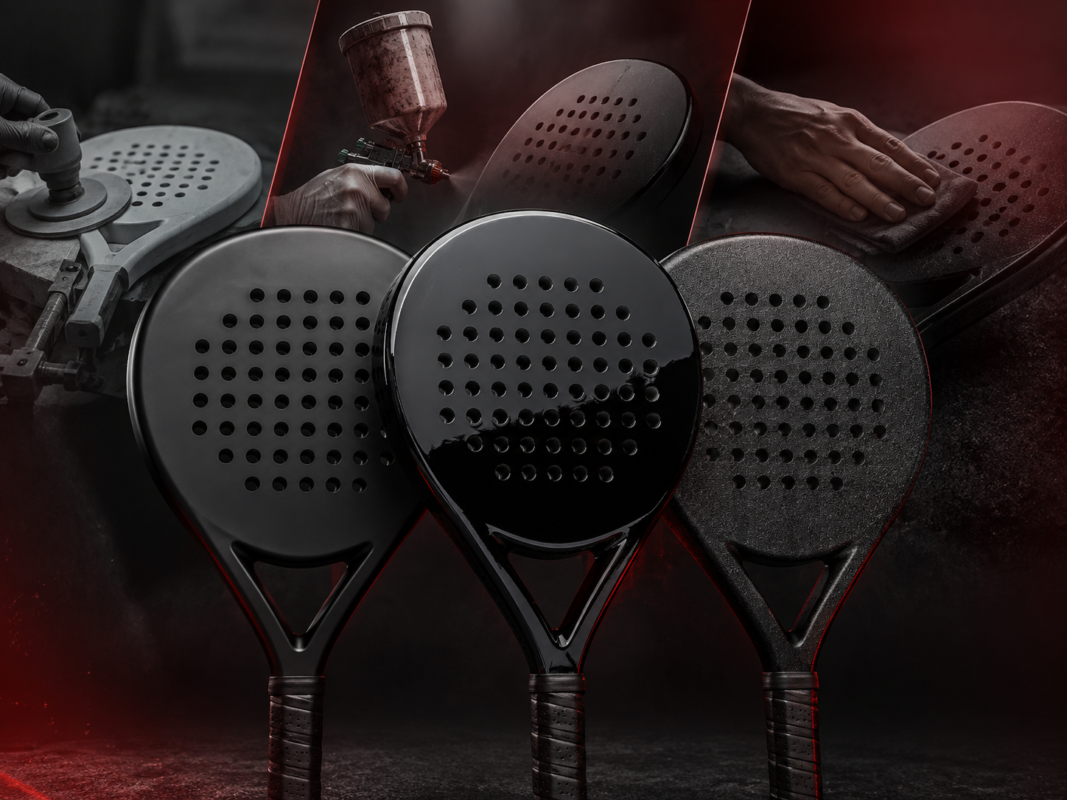
Padel racket surface finishing: matte, gloss and textured options is an important part of both product performance perception and brand identity. The final finish controls how the racket looks, how graphics are presented, how much surface texture is felt by the player and how consistently the product can be reproduced in OEM production.
A premium surface finish is not created by the final coat alone. It depends on the full finishing stack: composite surface preparation, sanding, filling, primer, color layer, graphics, texture treatment where required, clear coating and cure control.
What Is Padel Racket Surface Finishing?
Surface finishing is the final set of operations that defines the visual and tactile character of the racket face and frame. It follows the structural manufacturing stages and works over the prepared composite substrate.
The selected finish can influence:
- Gloss level
- Visual depth of graphics
- How carbon weave is presented
- Surface texture and hand feel
- Scratch visibility
- Brand positioning
- Production consistency
Finish type should be specified early enough in product development because the required clear coat, texture process and artwork stack may differ between matte, gloss and textured products.
Matte Finish for Padel Rackets
A matte finish has lower light reflection and produces a more subdued surface appearance. It is commonly used when a brand wants a technical, modern or premium visual style without the strong shine of a gloss clear coat.
The matte effect is normally controlled through the coating formulation and application process. It is not simply the result of applying less clear coat.
Advantages of Matte Finishes
- Low-reflection premium appearance
- Can make bold graphics feel more technical
- Can reduce the visual intensity of minor reflections
- Works well with exposed or printed carbon-style aesthetics
Production Considerations
Matte coatings require uniform application because uneven film thickness or spray technique can create visible differences in sheen across the racket.
Gloss Finish for Padel Rackets
A gloss finish creates a highly reflective surface and can increase the visual depth of colors, printed graphics and visible carbon weave.
Gloss finishes are often selected for rackets where the brand wants vibrant graphics, deep color saturation or a more polished visual character.
Advantages of Gloss Finishes
- Strong color depth
- Enhanced visual contrast
- Clear presentation of graphics
- Premium polished appearance
Production Considerations
Because gloss surfaces reflect light strongly, defects such as orange peel, dust inclusion, sanding marks or waviness can become more visible. Good surface preparation is therefore particularly important.
Textured Surface Finish for Padel Rackets
A textured finish intentionally creates a rougher or patterned surface instead of a completely smooth final face.
Textured finishes can be developed for tactile feel, visual differentiation or to create a more performance-oriented product character.
The amount of texture can range from very subtle micro-texture to a clearly noticeable rough surface.
Padel Racket Surface Finishing: Matte, Gloss and Textured Options
| Factor | Matte | Gloss | Textured |
|---|---|---|---|
| Appearance | Low reflection, technical | High reflection, polished | Technical / performance-oriented |
| Color Depth | Moderate | Usually strongest | Depends on coating stack |
| Surface Feel | Smooth to satin | Smooth | Rough or patterned |
| Defect Visibility | Sheen variation can show | Surface defects can be very visible | Texture can visually mask some minor irregularity, but consistency is critical |
| Brand Positioning | Modern / premium | Vibrant / polished | Technical / performance |
| Process Control | Gloss uniformity | Flow and surface level | Texture distribution and adhesion |
Surface Finish and Carbon Fiber Appearance
When carbon fiber is visible or represented as part of the design, the clear finish changes how the weave is perceived.
Gloss clear coat generally increases visual depth and reflection, making the weave appear darker and more pronounced. Matte clear coat reduces reflection and creates a flatter, more technical appearance.
For OEM development, the decision should consider both the actual reinforcement construction and the desired visual identity. A cosmetic carbon look and a structural carbon laminate are not the same thing.
Graphics and Surface Finish Compatibility
The final surface finish must be compatible with the graphics layer underneath it. Decals, transfer graphics, screen printing or other branding methods need sufficient adhesion and chemical compatibility with the final coating system.
A gloss graphic under matte clear can produce a very different final appearance from the same graphic under gloss clear. Brands should therefore approve the artwork and finish together, not as separate decisions.
At LeoEdge, this approval stage is important because logo placement, color direction and final sheen are evaluated as one finished product reference.
How Textured Padel Racket Finishes Are Created
Textured surfaces can be produced through different manufacturing approaches depending on the required effect.
Textured Clear Coat
A coating formulation can incorporate texture-producing components or particles that remain in the cured surface.
Added Surface Particles
Certain systems use compatible particles or granules within or beneath a clear layer to produce a rougher surface.
Molded Texture
Some surface patterns can originate from the mold or tooling rather than being created only by paint. This makes the texture part of the molded geometry.
Printed or Patterned Texture Effects
Decorative processes can also create the appearance of texture, although visual texture should not be confused with a genuinely rough tactile surface.
Surface Feel and Ball Interaction
A rougher racket surface can change the frictional interaction between the ball and racket face during contact. However, the effect on real play depends on the texture geometry, ball condition, impact angle and player technique.
It is therefore better to treat texture as one design variable rather than claiming that every textured finish automatically produces significantly more spin.
Durability of Matte, Gloss and Textured Finishes
Durability depends more on the coating chemistry, adhesion, cure and film build than on the visual label alone.
A well-formulated matte or gloss clear coat can provide good protection when correctly applied and cured. Textured finishes require additional attention because raised or rough features can experience localized wear.
For production, manufacturers should evaluate how the finish behaves around racket edges, drilled holes and high-contact zones.
Common Surface Finishing Defects
Gloss Variation
Uneven sheen caused by film thickness, spray technique, cure or formulation inconsistency.
Orange Peel
Uneven coating texture that can reduce the smooth appearance of a gloss finish.
Dust Inclusion
Particles trapped in the final coating during spraying or cure.
Texture Variation
Non-uniform roughness or particle distribution across the racket face.
Peeling
Loss of adhesion between coating layers or between coating and substrate.
Cloudiness or Haze
Loss of clarity that can affect gloss depth or carbon-fiber appearance.
Quality Control for Padel Racket Surface Finishing
The finish should be inspected against an approved production reference rather than judged only from memory.
Visual QC
- Color consistency
- Gloss or matte uniformity
- Texture consistency
- Graphic alignment
- Dust, runs or surface contamination
- Edge and hole-area finish
Process QC
- Coating batch identification
- Mix ratio where two-component coatings are used
- Spray viscosity
- Application sequence
- Flash time
- Cure temperature and duration
LeoEdge Surface Finishing Options
At LeoEdge Enterprises, finishing is developed around the OEM or ODM product brief. A brand can define the intended visual direction and the finishing stack can then be matched to the design and manufacturing process.
Typical finishing directions can include:
- Matte finish for a lower-reflection technical appearance
- Gloss finish for deeper color and stronger visual contrast
- Textured finish for a rougher tactile or performance-oriented surface
- Visible carbon-style finish combined with matte or gloss clear coating
- Custom graphics protected by the selected final coating
For LeoEdge projects, the approved sample should become the visual reference for production so color, sheen, texture and graphic positioning can be checked consistently during QC.
Choosing a Surface Finish for OEM and ODM Padel Rackets
Brands should select the surface finish according to the intended product identity, target player, artwork style and required manufacturing complexity.
Matte
Suitable for modern, understated and technical visual positioning.
Gloss
Suitable for deep colors, bold graphics and polished premium presentation.
Textured
Suitable for brands wanting a more tactile and performance-oriented surface concept.
Brand Brief → Composite Surface → Artwork → Finish Type → Sample → Visual & Tactile Approval → Durability/QC Review → Bulk Production
Frequently Asked Questions
Neither is universally better. Matte gives a lower-reflection technical appearance, while gloss provides stronger visual depth and reflection. The choice depends on the brand and product brief.
It is a deliberately rough or patterned finish created through coating, particles, molded geometry or another controlled finishing method.
Texture can influence friction during ball contact, but actual spin depends on surface geometry, ball condition, impact mechanics and player technique.
A compatible clear coat can protect decorative layers, but final durability depends on coating chemistry, adhesion, film thickness and cure quality.
Yes. OEM and ODM projects can define matte, gloss, textured and other compatible finish directions according to the manufacturer’s process capability and approved sample.
Final Thoughts
Padel racket surface finishing — matte, gloss and textured options — should be treated as part of the complete product-development process. The right finish depends on brand positioning, graphics, coating compatibility and manufacturing control.
Matte provides a technical low-reflection appearance, gloss adds visual depth and strong color presentation, while textured finishes create a more tactile and performance-oriented surface character.
At LeoEdge Enterprises, the objective is to turn the selected finish into a repeatable production standard so the approved OEM or ODM racket maintains consistent color, sheen, texture and branding across batches.
Create a Custom Padel Racket Finish With LeoEdge
Develop matte, gloss or textured racket finishes together with custom colors, graphics, composite construction and OEM/ODM product development.
Start Your Padel Racket Project